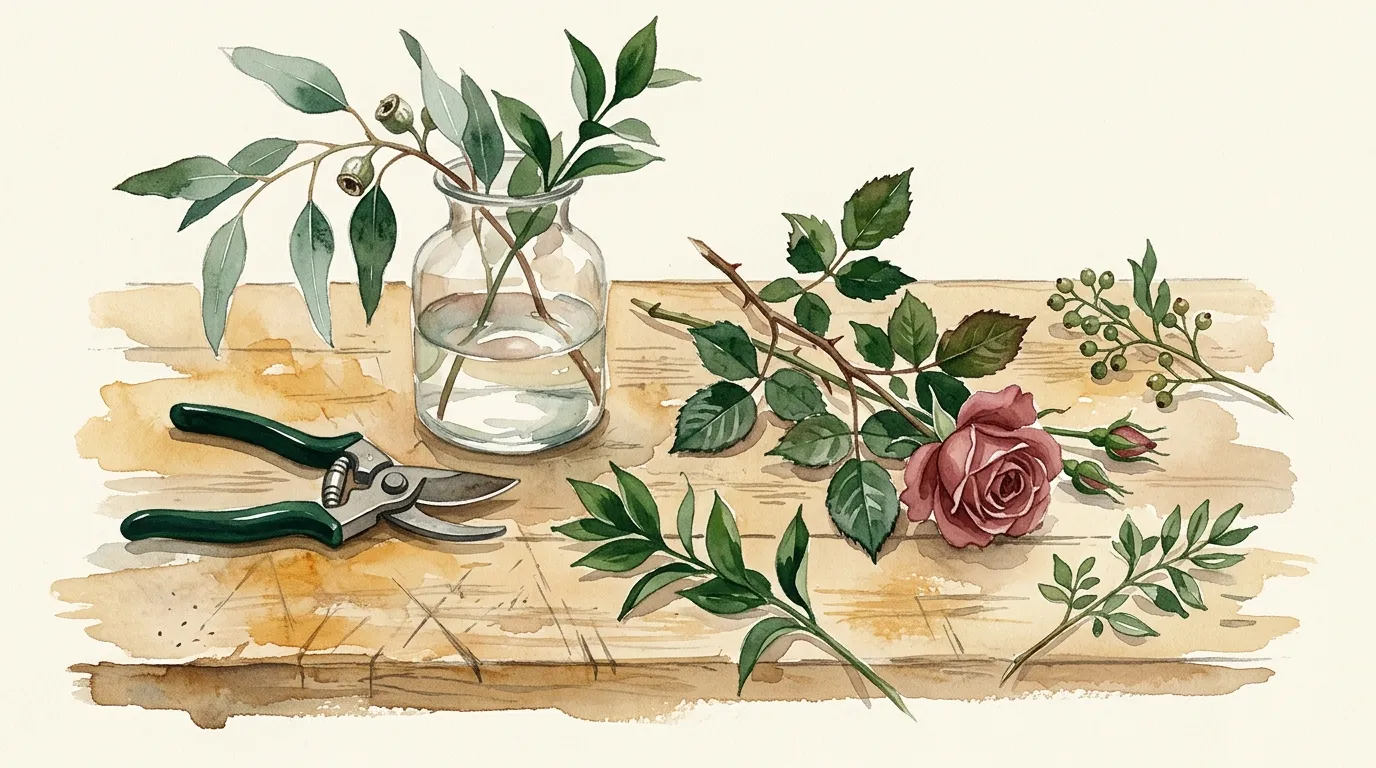
Flower care
How to keep cut flowers fresh
The full routine: a 2-3cm cut under running water, leaves stripped below the line, fresh water every second day, and the worst spots in an Irish house.
Checked on
Ten minutes on the day a bunch arrives is worth more than anything you do to it afterwards. Most of the difference between a bunch that lasts five days and the same bunch lasting ten is decided before it goes into water.
Before the flowers go in
Wash the vase. Not a rinse: hot water, washing-up liquid, and a scrub around the base and the shoulder where residue collects. Vases that have held flowers before carry a film on the glass that you can feel with a fingertip and cannot see. Rinse until there is no trace of soap, because detergent left behind damages stems.
Fill it with cool tap water, not warm, and mix the sachet in properly before the stems go in. Volume matters: a sachet is dosed for a set number of litres, and the packet says which. Half a dose is worse than no dose at all, because you get the sugar without enough biocide to control what the sugar feeds.
The cut
Take the bunch out of its wrapping and lay it on the worktop. Work one stem at a time.
- Strip every leaf that would sit below the waterline. Hold the vase against the stem to see where the line falls. Take leaves off cleanly at the stem rather than pulling downwards, which tears a channel for bacteria.
- Cut two to three centimetres off the bottom at roughly 45 degrees, with the cut end under running water or held in a bowl of water.
- Put the stem straight into the vase. Seconds, not minutes.
Use a sharp knife or proper floristry scissors. Kitchen scissors squash the stem flat and close the vessels you are trying to open.
Two exceptions to the standard cut. Woody stems, meaning lilac, hydrangea, most blossom and shop roses with hard bottom stems, take the same slanted cut but benefit from being stood in deep water for an hour before they go into the arrangement. Daffodils and narcissi leak a sap that shortens everything else in the vase; give them an hour alone in their own water after cutting, then arrange them without re-cutting.
The routine after day one
Change the water every second day. Not a top-up. Empty the vase, rinse it, refill with fresh cool water and a fresh dose of food if you have a second sachet. Cloudy water is bacteria, and by the time you can smell it the stems are already blocked.
Re-cut a centimetre each time. The cut end seals over and colonises within a couple of days. Taking a centimetre off gives you a clean opening again. This is the step people drop, and it is the one that separates a bunch that fades evenly from one that collapses on day four.
Pull the dead ones out. A flower that has gone over releases ethylene, which brings on the ones beside it. The same goes for a fallen petal sitting in the water. Chrysanthemums and alstroemeria in a mixed bunch will outlive everything else in it, so expect to strip a mixed vase back to those two and re-cut them into a smaller vase.
Deal with lily pollen. Pull the anthers off with a tissue as each flower opens. Pollen stains fabric permanently and it also shortens the flower once it is released. If it lands on a petal, lift it off with sticky tape rather than brushing it, which grinds it in.
Where to keep it, in an Irish house
Cool, bright, out of direct sun, out of a draught, away from the fruit bowl.
That last one does more work than people expect. Ripening fruit gives off ethylene, the gas that tells a flower its job is done. A vase beside a bowl of bananas or apples can lose two or three days. Move one or the other.
Irish houses have two specific problems.
Single-glazed windowsills in winter. A sill in an older house swings from close to freezing overnight to warm in a burst of afternoon sun. Flowers handle steady cold and steady warmth better than they handle that swing, and cold enough to freeze the water in a stem will finish a bunch outright. If the sill is the only place with light, move the vase off it at night.
Radiators. Heat under a vase dries the flowers from below and empties the water fast. The classic Irish arrangement spot, a shelf or a mantel over a radiator that comes on twice a day, is close to the worst place in the house.
The best compromise in most houses is a hall or a north-facing room: cool, lit, and rarely heated. If you want the flowers in the sitting room while you are in it, move them out at night. A bunch that goes somewhere cold overnight will noticeably outlast the same bunch left beside a stove.
Bunches that arrive in bud, including anything sent through a letterbox, want the opposite treatment for the first day: a warmer spot encourages them to open. Once they are open, move them somewhere cool.
What good care cannot do
None of this changes a flower's ceiling. Sweet pea gives four or five days with perfect care; carnations give a fortnight with none. The vase life table has realistic figures, and it is worth checking before you conclude you did something wrong. If a bunch is already going over, work out which of the three causes you are looking at before you try anything.
Questions people ask
Do I have to cut the stems under water?
How much should I cut off?
How often do I change the water?
Where is the worst place to put flowers in an Irish house?
Should I take the flowers out of the wrapping straight away?
Read next
- Flower care: what actually extends vase lifeThe five things that add days to a bunch, ranked by how much each is worth, and why aspirin, lemonade and a copper coin in the vase do nothing useful.
- Flower food: what is in the sachet, and a recipeSugar, acidifier and biocide, and why the dose matters: 1 tsp sugar, 1 tsp vinegar and a quarter tsp bleach per litre, plus when plain water is safer.
- Vase life by flower: a reference tableRealistic days in a vase for 15 common flowers, from carnations at 14 plus down to sweet pea at 4 to 5, each with the one care note that changes the number.
- How to revive wilting flowersWork out whether it is an air lock, bacteria or age, then use the right fix: hot water for woody stems, a tight paper wrap for roses with bent necks.