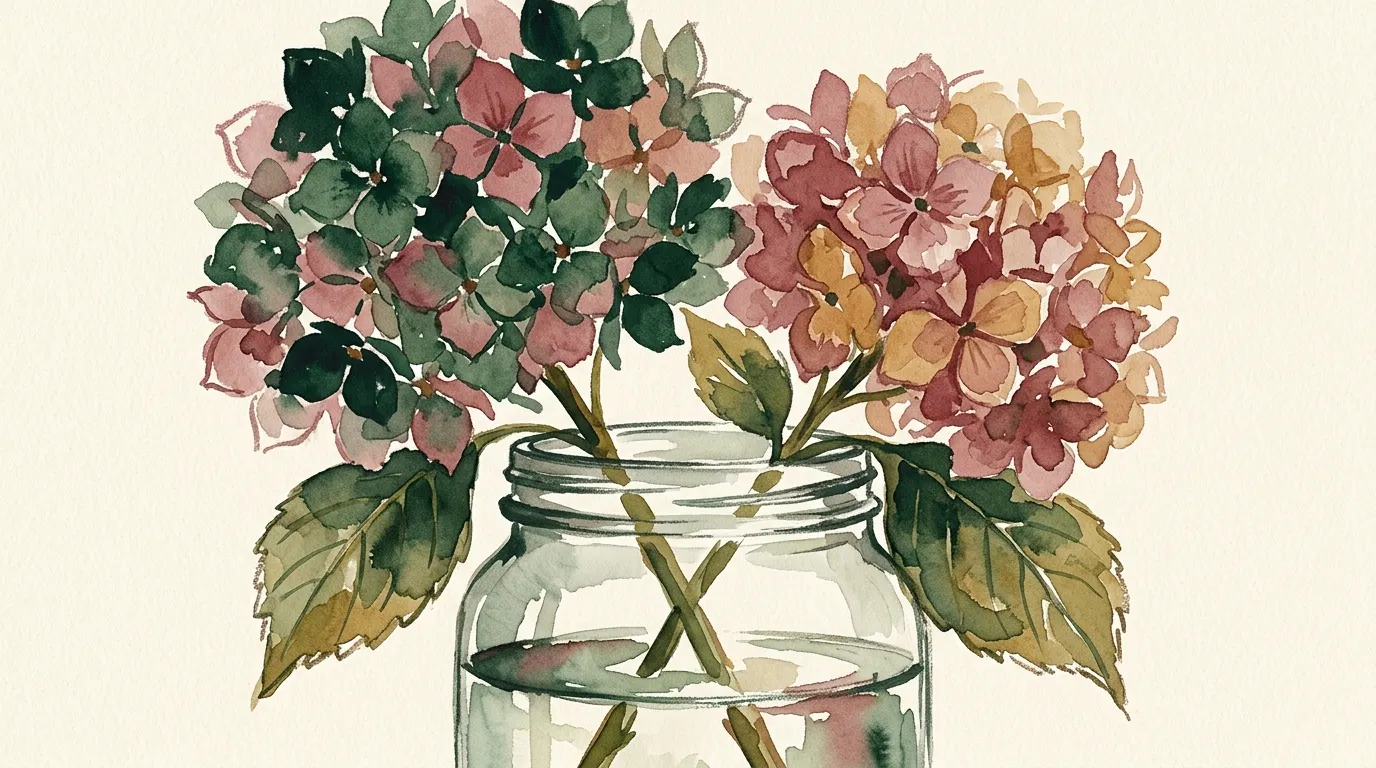
Hydrangea
Hydrangeas: Irish season, meaning and the wilting fix
A wilted hydrangea can be brought back by submerging the whole head in cold water. The Irish season, the blue soil question, and the meanings that conflict.
Checked on
In season in Ireland
- January: out of season
- February: out of season
- March: out of season
- April: out of season
- May: out of season
- June: out of season
- July: in season
- August: in season
- September: in season
- October: out of season
- November: out of season
- December: out of season
July to September
- Traditionally means
- Gratitude and heartfelt thanks in current use, though Victorian lists gave the same flower coldness and vanity
- Vase life
- About 8 days
- Grown in Ireland
- Yes, commercially
- Care in one line
- Cut on a slant, keep the vase full, and revive a wilted head by floating the whole flower face down in cold water
- Botanical name
- Hydrangea macrophylla
A hydrangea that has collapsed in a vase is usually not finished. Float the whole flower head face down in a basin of cold water for half an hour and it comes back, because hydrangea petals take up water through their surface rather than only through the stem. No other flower on the Irish shelf does that, and it turns the most temperamental cut flower in the shop into a manageable one.
The reason they collapse in the first place is that a hydrangea head is hundreds of small flowers on a woody stem, losing water faster than the stem can replace it.
What hydrangeas mean
The meanings conflict, and the conflict is worth stating plainly.
Current florist usage gives the hydrangea gratitude, heartfelt thanks and abundance, which is the reading behind its use as a thank-you flower and in wedding work. Japanese tradition associates it with heartfelt apology.
The Victorian language of flowers gave the same flower coldness, frigidity and vanity, on the grounds that a plant producing so much flower and so little seed was all show. That is trivia rather than a live meaning, and nobody in Ireland will read a bunch of hydrangeas as an insult. It is quoted often enough on the internet that a reader who researches flowers might meet it.
The practical Irish reading is a garden flower, late summer, and the seaside towns where they line the road.
Season in Ireland
Hydrangeas are one of the genuinely Irish cut flowers. They grow across the country and thrive in the mild, wet, acid conditions of the west and south west, which is why the roadsides around west Cork and Kerry turn blue in August. Irish flower farms cut them from July to September and sell to florists and at markets, and garden heads are free if you know anyone with a shrub.
Imported stems from Dutch and Colombian growers are available most of the year at a price that reflects the airfreight. Buying them in February makes little sense when the same money in August buys three times as much.
The late-season heads, cut in September when the colour has gone antique, are the ones to dry.
When to send them, and when not to
Hydrangeas suit a thank you, a house-warming, a summer wedding and any arrangement that needs mass without a large number of stems. That last point is a real budget lever: one hydrangea head fills the space of six or seven roses, which is why they turn up in Irish wedding flowers in July and August.
Do not send them anywhere they will sit unattended for two days. Of all the common cut flowers this is the one most likely to be found collapsed, and the person receiving it may not know the water trick.
Do not send them for a formal sympathy arrangement, where the stems are too soft and the look too domestic, and do not send them in a hand-tied bunch that will be out of water for hours. They should go straight from the shop into a vase.
Care
Cut 3cm off on a slant with secateurs. The stem is woody and older advice recommends splitting it upwards; a clean slanted cut is better and rots less.
Strip every leaf. Hydrangea leaves are large and compete with the flower for water, and a stem with the foliage removed lasts noticeably longer.
Keep the vase full rather than shallow. This flower drinks more than anything else on this site.
Some florists dip the cut end in boiling water for 20 seconds or use a pinch of alum on the cut before arranging. Both work by clearing the sap that seals a woody stem. Neither is necessary if the stems go into water within a few minutes of being cut.
Then leave them out of direct sun, mist the heads on a hot day, and use the basin trick the moment one starts to droop.
When to send them
Ordering hydrangea delivered in Ireland is a question of who reaches the address and by when, not of who stocks the stem: most services build to a style rather than to a single flower, so ask before you pay if it has to be this one.
Questions people ask
How do you revive a wilted hydrangea?
Why are hydrangeas blue in some Irish gardens and pink in others?
Can you dry hydrangeas?
Are hydrangeas poisonous?
Read next
- Peonies: the six-week Irish season, meaning and carePeonies are worth the price for about six weeks a year and overpriced for the other forty-six. When they are in, what they mean, and how to open a tight bud.
- Sunflowers: meaning, Irish season and how to keep themSunflowers foul their water faster than any other cut flower, which is why they die in five days for most people. The season here, the meaning, the fix.
- Irish flowers in season: a month-by-month calendarWhat Irish growers genuinely cut in each month, January to December, in one table: snowdrops in January, peonies in June, dahlias to the first frost.
- What wedding flowers cost in IrelandReal Irish quotes item by item: 150 to 350 for the bridal bouquet, 60 to 150 a centrepiece, and the four cuts that save money nobody notices.