November is the month Irish families go to the cemetery without being asked.
All Saints' Day falls on 1 November and All Souls' Day on the 2nd, and in Irish
Catholic practice the whole month belongs to the Holy Souls. Parishes put out
envelopes for the November list of the dead, Masses are offered for the names on
it through the month, and a great many people who would not otherwise go stop at
a family grave on the way home.
November is not Cemetery Sunday
The big set-piece Irish graveyard day is Cemetery Sunday, the annual Mass and
blessing of the graves, when families scrub headstones, rake the gravel and
fill every holder they own. That is mostly a summer custom, and each parish
picks its own Sunday. Dublin Cemeteries Trust, which runs Glasnevin and four
other Dublin cemeteries, held its 2026 remembrance ceremonies between 31 May
and 12 July, which is typical.
November is quieter and more personal. Some parishes, several in Clare among
them, bless the graves on a November Sunday, and many hold a Mass for everyone
who died in the past year. But most November visits are a family on their own, with
a pot and a cloth. For anyone bereaved since last winter, it is often the first
November visit, and it is harder than people expect.
The point for buying is that nothing here needs a florist on a deadline. The
flowers that do best on a grave in November are bought at a garden centre or a
supermarket and carried in by hand.
What survives a November week outdoors
Wind and rain are the real problem, more than cold. An Irish November is wet,
blustery and usually mild, with frost inland on clear nights. A cut bunch in a
grave holder takes all of that at once, and it looks bedraggled long before it
actually dies.
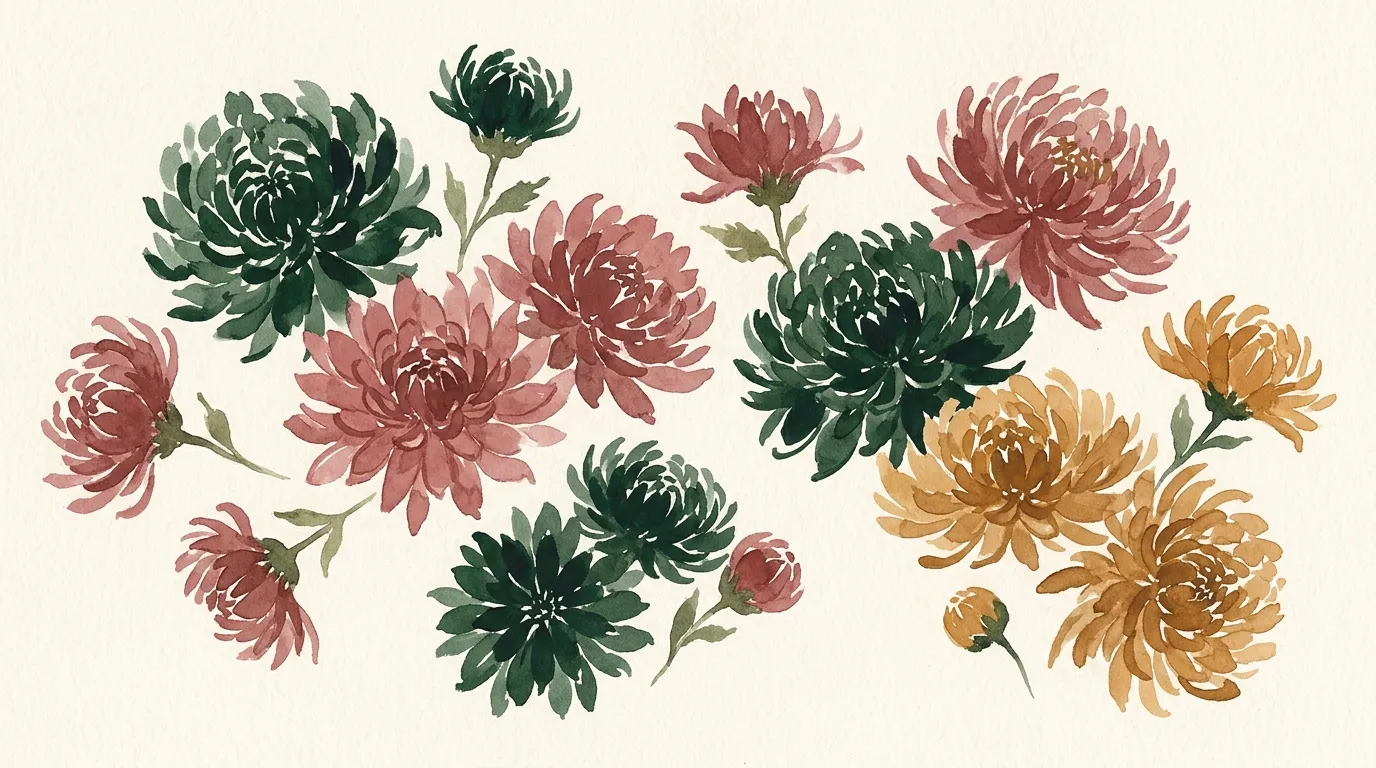
Pot chrysanthemums are the standard answer and the right one. They are in
every garden centre and supermarket through October and November, they flower
for weeks outdoors, and they are the flower much of continental Europe takes to
graves for exactly this week. There is more on the flower, and why it reads so
differently in France, on our chrysanthemums page.
Heather is the hardiest thing you can put on a grave. Winter-flowering
heathers sit through frost and gales and still look tidy in January.
Winter pansies and violas are cheap, hardy and flower on through mild spells
all winter. They suit a grave with a planting bed or a trough.
Small cyclamen, sold in autumn for tubs and window boxes, do well in a
sheltered spot through a mild November. A hard frost finishes them, so treat
them as a few weeks of colour rather than the whole winter.
Cut flowers, if you want them, should be chrysanthemums or carnations, both
of which outlast nearly everything else in water. Take the wrapping off before
you leave. Cellophane on a grave fills with rain, rots the stems and ends up in
a hedge.
Whatever you bring, weigh it down. A plastic pot on a gravel grave will be two
rows over after the first storm; a heavy terracotta or stone pot stays put. Leave glass jars at home: broken glass in a
graveyard cuts whoever strims the grass.
Artificial flowers, and the rules nobody reads
Artificial flowers make an obvious kind of sense on a grave nobody can visit
often, and plenty of Irish graves carry them all year. They also fade badly in
the open and blow about in a gale, and some cemeteries do not allow them for
long, or at all.
The rules depend on who runs the cemetery: a county council, a parish committee,
a trust or a private operator. Council cemeteries are governed by bye-laws, and
the newer lawn-style ones are the strictest. Two we read for ourselves:
- Dún Laoghaire-Rathdown (Cemetery Bye-Laws 2013): at Shanganagh, laid out
as a lawn cemetery, artificial flowers and wreaths are allowed for one month
after a burial and must then be removed. Fresh flowers go in up to two holders
at the head of the grave, no planting is allowed, and fragile mementos are not
permitted.
- Fingal (Burial Ground Bye-Laws 2023): planting shrubs and flowers is not
permitted in its lawn cemeteries.
Old churchyards with kerbed family plots are usually far more relaxed. If you
are not sure, ask the caretaker or the council's burial grounds office before
buying anything for a lawn cemetery.
Wreaths for a grave
A grave wreath is mostly a December thing in Ireland, and it is covered on our
Christmas flowers page. In November a wreath is
more likely to mean an anniversary or a first November after a death.
Ask for one on a moss or straw base rather than floral foam. Foam is a plastic,
it crumbles into the gravel as it ages, and a moss base lasts as long outdoors
anyway. The shapes and what a florist charges for each are set out on
funeral flower arrangements.
Sending flowers to a grave when you cannot be there
Plenty of the people wanting flowers on an Irish grave in November are in
London, Boston or Sydney, and this is where the national delivery services stop
being much help.
None of the eight services we compare publishes a delivery-to-grave option. A
courier needs somebody to hand the flowers to, and a cemetery has no letterbox
and nobody at the door. Interflora's delivery information, for example, describes
funeral orders as delivered to the funeral home or to family, not to a
graveside.
What works instead:
- Ring a florist in the town. Some local florists will place flowers on a
grave in their own area if you give them the cemetery, the row and the
family name, and they will often send a photograph if asked. Direct2Florist
lets you choose the local florist by name, which gives you a shop to ring
before you order. Confirm by phone that they will take it to the grave; do not
assume the website checkout has understood.
- Have someone local collect it. Interflora publishes a free click and
collect option, so a relative or neighbour can pick up an order at a member
florist and bring it to the cemetery.
- Ask whoever already tends the grave. Many family graves in Ireland have a
cousin or a neighbour who looks after them. Paying for a pot of chrysanthemums
and a tidy-up through them is usually better than anything a courier could do.
And sometimes the better answer is not flowers at all. For a family that still
practises, putting the name on the parish's November list of the dead, or
having a Mass said, carries more weight than anything left on the gravel. It
costs less, and it needs nobody to travel.