The envelope is the gift. Every Irish parent knows this and every visiting
relative knows it, so flowers at a First Communion are never the present. They
are part of the outfit, part of the table, and occasionally a thank you to
whoever is doing the cooking.
Communion season in Ireland is May, on Saturday mornings, parish by parish. A
florist in a town with three parishes can be making up sixty small white posies
on the same Friday afternoon, which is worth knowing before you ring on the
Thursday.
The four places flowers turn up
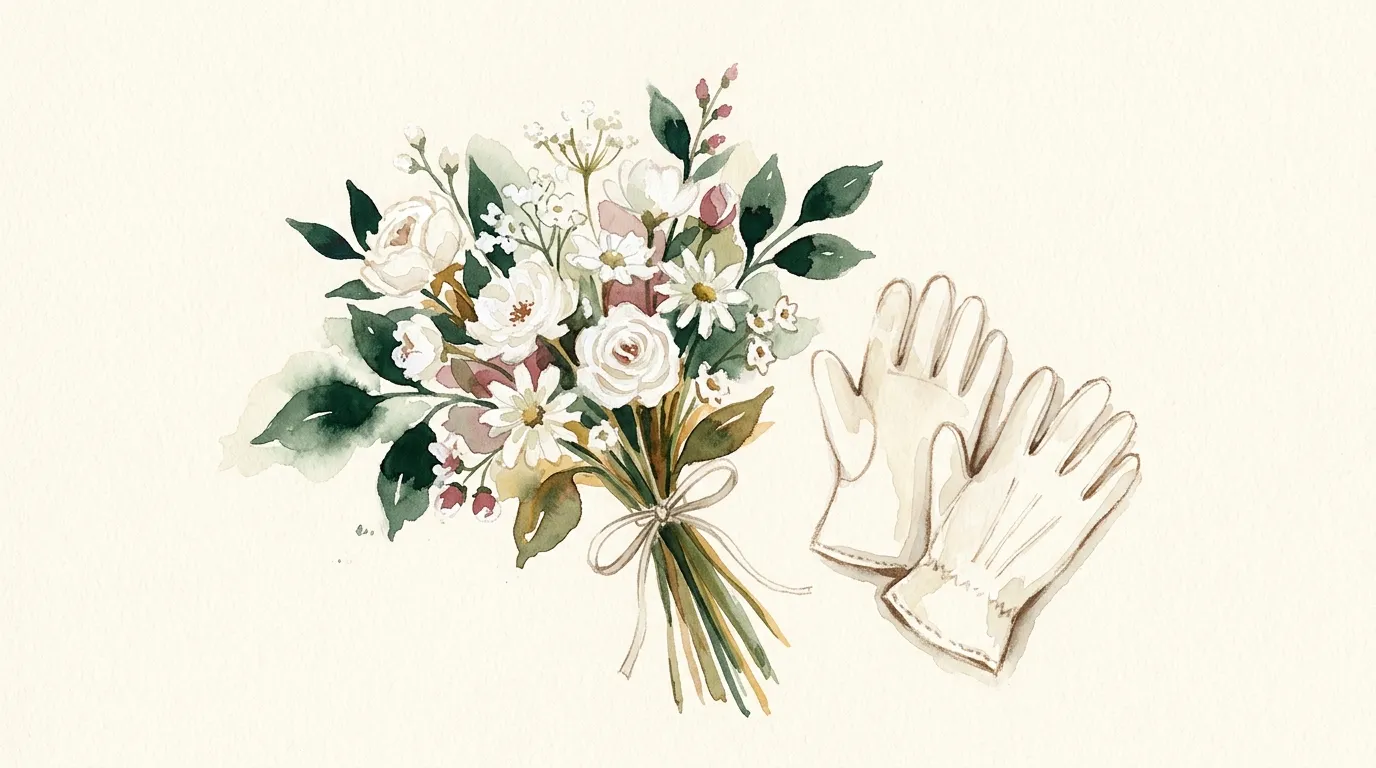
On the child. A small hand-tied posy in white, cream or the softest pink, a
single flower pinned into the hair, or a slim wrist band. Everything is scaled
down, because a seven-year-old with a full bouquet spends the ceremony managing
it. Boys occasionally get a buttonhole, usually only when an older brother had
one.
On the tables. The party afterwards is where the flower budget mostly goes.
Low arrangements in the 30 to 60 euro band per table are what a florist will
quote, and low is the operative word: nobody wants to talk around a tall
centrepiece at a family lunch.
In the church. Not your job. Parishes handle the altar through a flower
committee, and where there is a cost it is usually collected from all the
families together. Turning up with your own arrangement for the altar is a
misunderstanding rather than a kindness. Ask the sacristan if you want to
contribute.
For the grandmother, or the host. This is the one that gets forgotten and
the one that lands best. A bouquet delivered to the house the day before, for
whoever is hosting, does more work than anything on the child.
What it costs, roughly
- Child's posy: 15 to 30 euro
- Hair flower or made-up flower crown: 25 to 45 euro
- Wrist band: 20 to 35 euro
- Buttonhole: 8 to 15 euro
- Low table arrangement: 30 to 60 euro each
- Bouquet for the host or a grandparent: 40 to 65 euro delivered
Hotels and function rooms sometimes have their own supplier and their own
markup, so ask what is included before ordering separately.
The part worth skipping
Five made-up centrepieces at 45 euro each is 225 euro of flowers for a lunch
that runs three hours, at an event where the outfit, the photographer and the
food have already taken the money. Almost nobody looks at them.
Three supermarket bunches at ten euro each, cut short and split between eight or
ten jam jars down the middle of the table, costs about thirty euro and looks
right in a house. Do it the night before, in water, and it takes half an hour.
The 5 to 20 euro supermarket bunch is the most underrated thing in the Irish
flower trade, and this is exactly the occasion for it.
Spend the difference on the bouquet for the person cooking.
Ordering
Two weeks out for anything made up, and that is not a padded number. A local
florist near a large parish has a hard Friday in May, and the small white pieces
are all being made in the same afternoon.
Tell the florist the child's name, the parish, the Mass time, and whether you
need collection on the Friday evening or the Saturday morning. Most will hold
posies in the fridge overnight, which is better than a hair piece sitting on a
kitchen counter.
If you are ordering from outside the county, a relay network that hands the
order to a named local florist is more reliable than a courier for something
this small and this fiddly. You can also ring that florist directly to say the
dress is ivory rather than white, which matters more than it sounds.
What is around in May
May is one of the better months to be buying flowers in Ireland. Irish-grown
stocks, sweet william, alchemilla, early sweet pea and the first Irish roses are
all in play, along with peonies from late May, which are the one flower likely to
blow the budget. White ranunculus and lisianthus do most of the work in Communion
posies, and carnations hold up better than anything else in a warm church, which
is set out on our carnations page.
Confirmation season overlaps, usually April and May, and everything above
applies with the sizes moved up. A twelve-year-old will carry a proper bouquet
and will still prefer the envelope.