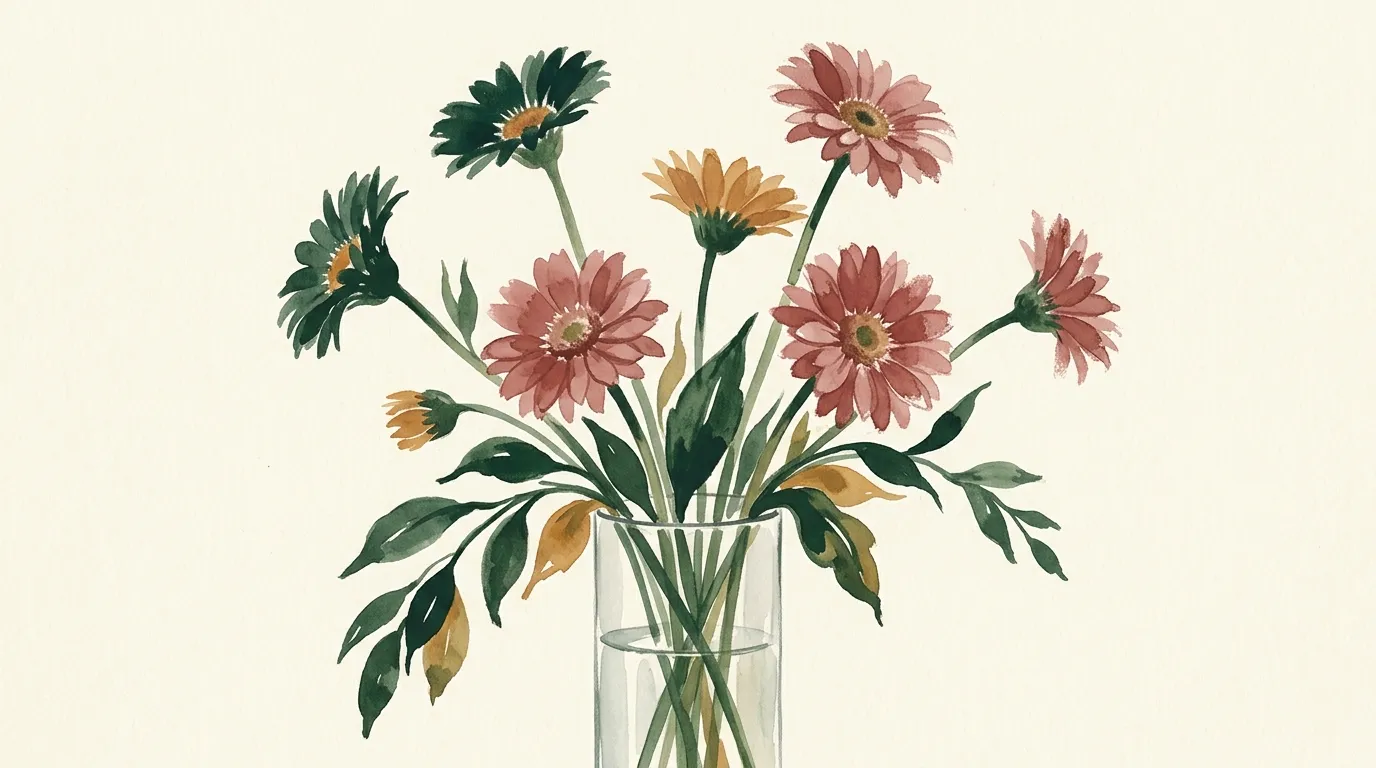
Gerbera
Gerberas: why the necks bend, meaning and vase care
Gerbera stems are hollow and rot from the cut end, which is why the heads flop on day three. The water depth that fixes it, plus what the colours say.
Checked on
In season in Ireland
- January: out of season
- February: out of season
- March: out of season
- April: out of season
- May: out of season
- June: out of season
- July: out of season
- August: out of season
- September: out of season
- October: out of season
- November: out of season
- December: out of season
Not grown in season in Ireland
- Traditionally means
- Cheerfulness and simple good wishes, a modern florist reading rather than an old tradition
- Vase life
- About 8 days
- Grown in Ireland
- No, imported
- Care in one line
- About 5cm of clean water, changed daily, and a vase or a grid that holds the heads upright
- Botanical name
- Gerbera jamesonii
A gerbera stem is a hollow tube with a heavy head on top of it, and it rots from the bottom up. That is the entire explanation for the flopping everyone complains about, and it is why the advice for gerberas contradicts the advice for almost everything else: keep the water shallow, about 5cm, and change it every single day.
Do that and the flower gives eight to ten days. Leave a gerbera standing in 15cm of water for a week and the neck goes soft while the flower itself is still fine.
What gerberas mean
Cheerfulness, and not much else. The gerbera reached European horticulture from South Africa in the late nineteenth century and was bred into its current form in the twentieth, so it missed the Victorian language of flowers entirely. Every meaning attached to it now is modern florist convention.
By that convention, colour carries the message: yellow and orange for cheer, pink for warmth and admiration, red for love without the weight a red rose carries, white for simplicity. A gerbera has no funeral association in Ireland and no romantic obligation attached to it, which is a useful combination.
What it actually says is that somebody wanted to make you smile and did not want to be solemn about it.
Season in Ireland
None. Gerberas are glasshouse flowers grown in the Netherlands, Colombia and East Africa, and they arrive here in the same volume every week of the year. There is no Irish crop and no season worth waiting for, which is why the strip above is empty rather than green.
The plants sold as garden gerberas in Irish garden centres in summer are the same species and will flower on a warm patio, but they will not survive an Irish winter outdoors.
When to send them, and when not to
Gerberas suit a get well, a birthday, a new job, a child's birthday, a housewarming, and anything meant to be read as bright and uncomplicated. They photograph well and they are cheap enough to send a lot of them.
They work for Irish Mother's Day, particularly for anyone who finds roses and lilies too formal, and they mix well with the tulips and daffodils that are in season the same week.
Do not send them for sympathy. The tone is entirely wrong for an Irish funeral home.
Do not send them anywhere the water will not be changed. Of all the flowers on this site, gerberas punish neglect fastest, and a bunch left for four days in the same water will be face down on the table.
Do not choose them for scent, because they have none at all. If the room needs to smell of something, freesias will do it for less money and sweet pea will do it better in July.
One thing worth knowing before you pay for a large gerbera bouquet: the flower is sold in two grades that look similar in a photograph. Standard gerberas have heads around 10cm across on thick stems, and germini, the smaller type, are about half that on shorter stems and cost noticeably less. A dozen germini in a jug does more for a kitchen table than five standard gerberas in a tall vase, and most people cannot name the difference afterwards.
Care
Cut 2cm off on a slant with a sharp blade. Gerbera stems crush easily and a crushed end blocks quickly.
Fill the vase to about 5cm. Less water means less stem submerged and less to rot, and the flower takes up plenty from a shallow depth.
Change that water daily, and re-cut a centimetre off every second day. This is more attention than any other flower here asks for and it is the difference between three days and ten.
Use a narrow-necked vase, or a wide one with tape in a grid across the top, so the heads are held rather than resting on the rim. A gerbera that leans against glass creases at the neck and never straightens.
Keep them out of the sun and away from ripening fruit, which closes them early. The general rules in the care guide all still apply, minus the deep water.
When to send them
Ordering gerbera delivered in Ireland is a question of who reaches the address and by when, not of who stocks the stem: most services build to a style rather than to a single flower, so ask before you pay if it has to be this one.
Questions people ask
Why do gerbera heads flop over?
What is the plastic straw around a gerbera stem for?
Are gerberas grown in Ireland?
Are gerberas safe for cats and dogs?
Read next
- Sunflowers: meaning, Irish season and how to keep themSunflowers foul their water faster than any other cut flower, which is why they die in five days for most people. The season here, the meaning, the fix.
- Carnations: meaning by colour, vase life and valueCarnations last two to three weeks and cost less than anything else in the shop, which is why florists use them and buyers dismiss them. Colours and care.
- How to keep cut flowers freshThe full routine: a 2-3cm cut under running water, leaves stripped below the line, fresh water every second day, and the worst spots in an Irish house.
- Vase life by flower: a reference tableRealistic days in a vase for 15 common flowers, from carnations at 14 plus down to sweet pea at 4 to 5, each with the one care note that changes the number.