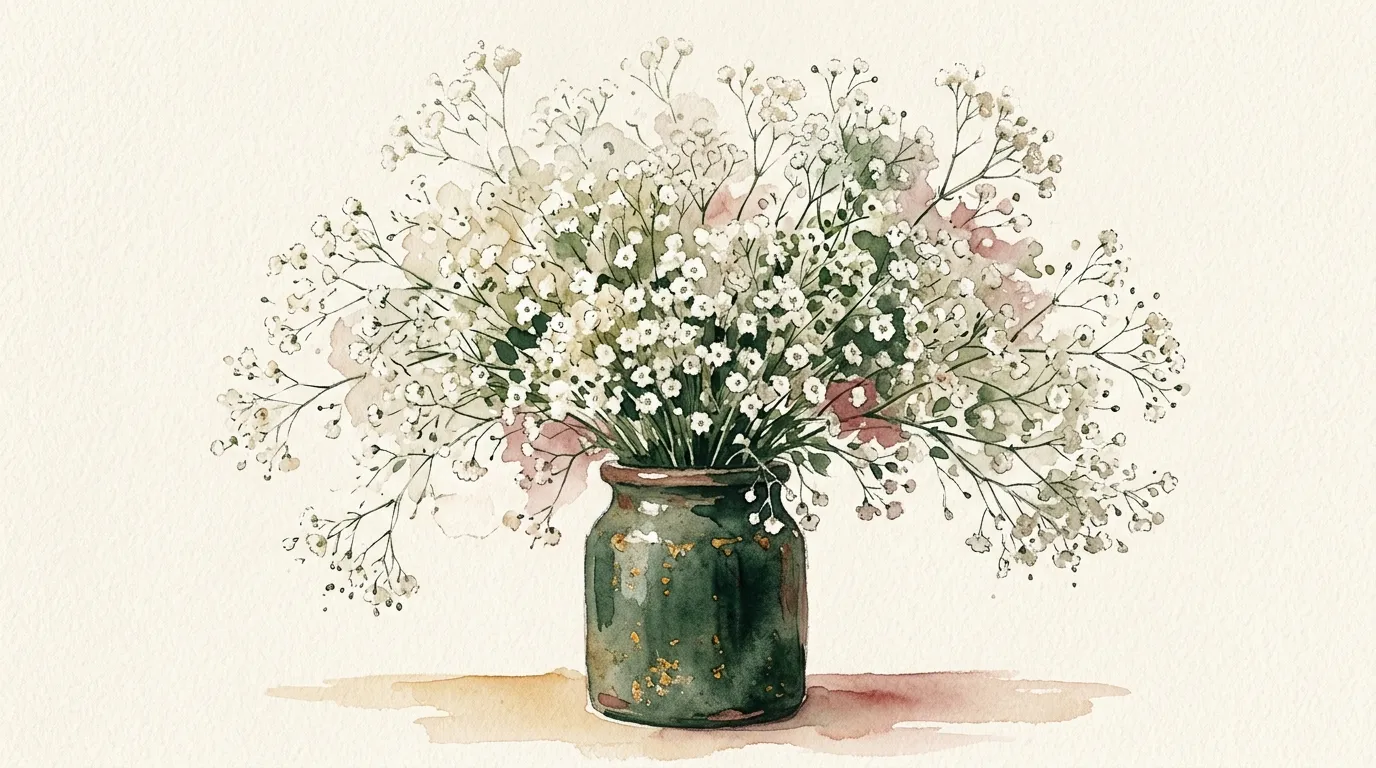
Gypsophila
Gypsophila: filler, wedding flower and cheap centrepiece
A single bunch of gypsophila fills a table for under 10 euro and dries into something that lasts months. What it means, when to use it, when to leave it out.
Checked on
In season in Ireland
- January: out of season
- February: out of season
- March: out of season
- April: out of season
- May: out of season
- June: in season
- July: in season
- August: in season
- September: out of season
- October: out of season
- November: out of season
- December: out of season
June to August
- Traditionally means
- Everlasting love and purity, which is why it turns up in wedding work more than anywhere else
- Vase life
- About 12 days
- Grown in Ireland
- No, imported
- Care in one line
- Shallow clean water changed often, and let the last of it dry out in the vase rather than binning it
- Botanical name
- Gypsophila paniculata
Three bunches of gypsophila in a wide vase will fill a dinner table for under 20 euro, hold for the best part of two weeks, and then dry in place and stay there for months. Nothing else in an Irish flower shop does that arithmetic, which is worth saying because gypsophila spent thirty years being dismissed as the stuff padding out a garage bouquet.
The trade rediscovered it around 2015 and started selling gypsophila-only bouquets at full price. The flower did not change.
What gypsophila means
Everlasting love, purity and innocence. That is the settled florist reading and it explains the flower's grip on wedding work: something that means everlasting love and costs almost nothing is a useful thing for a florist to have.
The common name, baby's breath, comes from the softness of the flower rather than from any tradition, and it is one reason it turns up at christenings and new baby gifts.
There is no Victorian meaning worth quoting here. Gypsophila paniculata became a commercial cut flower in the twentieth century, and the meanings attached to it were attached by the trade.
Season in Ireland
The cut supply is entirely imported, year round, from Ecuador, Kenya, Israel and the Netherlands. There is no Irish commercial crop and no seasonal price swing worth planning around.
The annual form, Gypsophila elegans, grows easily in Irish gardens from a spring sowing and flowers from June to August, and a few Irish flower farms grow it in small quantities as a filler for their own bunches. It is looser and softer than the imported perennial type and lasts about a week. Nothing from that reaches a florist's wholesaler, which is why this page reads as imported rather than Irish grown.
When to use it, and when to leave it out
Gypsophila earns its place in three situations. As a cheap mass of white for a table, a marquee or a windowsill. As the softener in a mixed bunch, where it stops roses looking rigid. And in wedding flowers, where it is the single most effective way of cutting the stem count without the arrangement looking thin, in bouquets, on aisle ends and along tables.
It is also standard in Irish sympathy work, filling wreaths and sprays, and nobody reads any meaning into it there.
Leave it out where the arrangement is meant to look expensive and modern. A ring of gypsophila around a dozen red roses is the specific look that gave the flower its reputation, and a mixed foliage or a few sprigs of eucalyptus does the same job with none of the association.
Leave it out of a small warm room as well. The scent is faint but sour, and it grows stronger as the water ages.
Care
Cut 2cm off the stems on a slant and strip anything that sits below the water. Gypsophila stems are wiry and there is very little foliage to worry about.
Use shallow water and change it every second day. This is a smell question as much as a longevity one: gypsophila water goes off faster than the flower does.
Give the bunch room. The stems tangle, and a bunch crammed into a narrow vase mats together and browns in the middle. Shake it out and use something wide.
Then let it dry. When you would normally throw a bunch out, stop topping up the water instead and leave the stems standing until the vase is empty. The flowers dry cream and stiff and will sit on a shelf until you are tired of them. It is the cheapest long-term arrangement in this whole pillar, and no shop is going to suggest it.
When to send them
Ordering gypsophila delivered in Ireland is a question of who reaches the address and by when, not of who stocks the stem: most services build to a style rather than to a single flower, so ask before you pay if it has to be this one.
Questions people ask
Is gypsophila cheap enough to use on its own?
Why does gypsophila smell?
How do you dry gypsophila?
Is gypsophila poisonous?
Read next
- Roses: what each colour means, season and careRed says one thing and yellow says another. What each rose colour means, why the February ones were cut in Kenya, and how to stop the necks bending.
- Hydrangeas: Irish season, meaning and the wilting fixA wilted hydrangea can be brought back by submerging the whole head in cold water. The Irish season, the blue soil question, and the meanings that conflict.
- What wedding flowers cost in IrelandReal Irish quotes item by item: 150 to 350 for the bridal bouquet, 60 to 150 a centrepiece, and the four cuts that save money nobody notices.
- Vase life by flower: a reference tableRealistic days in a vase for 15 common flowers, from carnations at 14 plus down to sweet pea at 4 to 5, each with the one care note that changes the number.