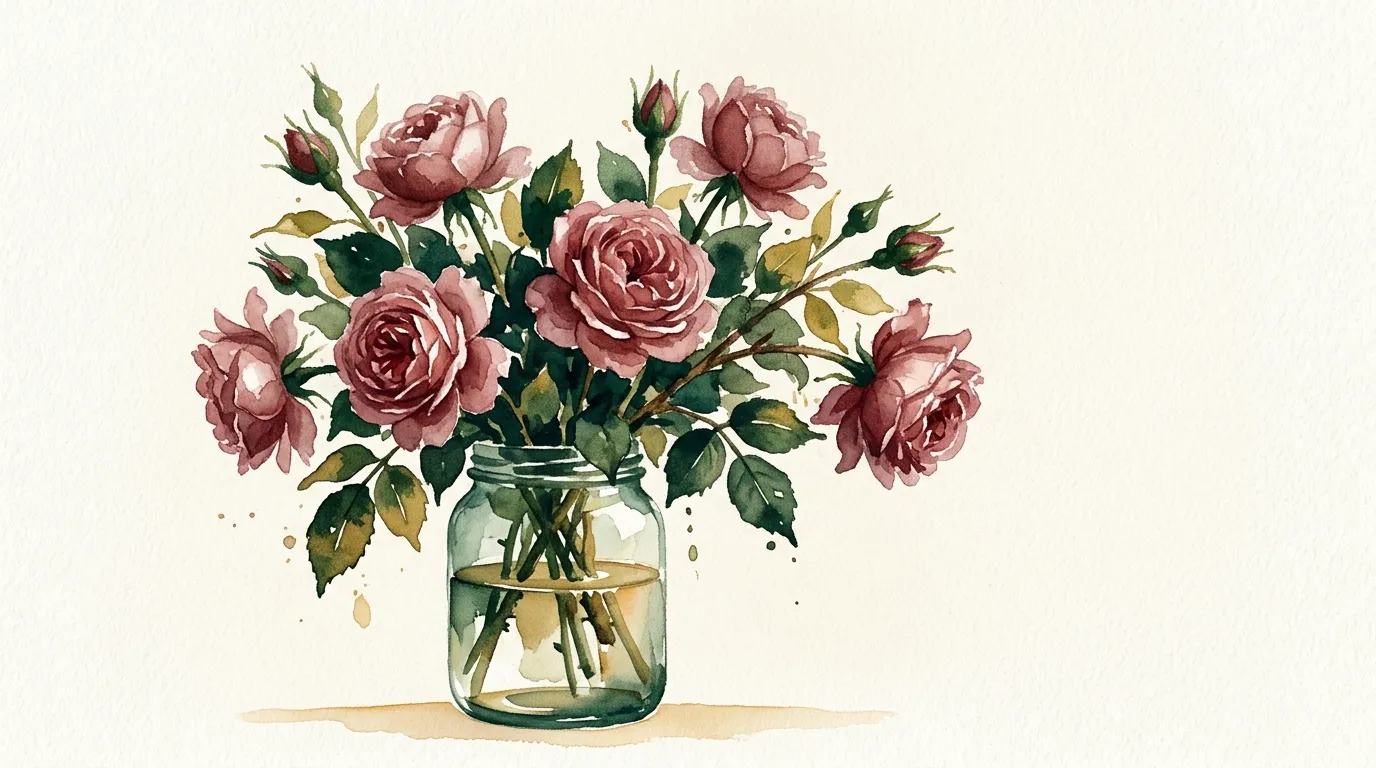
Rose
Roses: what each colour means, season and care
Red says one thing and yellow says another. What each rose colour means, why the February ones were cut in Kenya, and how to stop the necks bending.
Checked on
In season in Ireland
- January: out of season
- February: out of season
- March: out of season
- April: out of season
- May: out of season
- June: in season
- July: in season
- August: in season
- September: in season
- October: out of season
- November: out of season
- December: out of season
June to September
- Traditionally means
- Love, with the colour carrying the specific message: red for romance, yellow for friendship, pink for gratitude
- Vase life
- About 7 days
- Grown in Ireland
- No, imported
- Care in one line
- Cut 2cm off each stem on a slant, strip every leaf below the water line, and change the water every second day
- Botanical name
- Rosa
Around 95 percent of the cut flowers sold in Ireland arrive by plane or lorry, and the rose makes the case better than anything else on the shelf. The bunch in a Dublin shop in February was almost certainly cut in Kenya or Ecuador, graded within a day, and flown through Amsterdam to a Dublin wholesaler. Roses grown outdoors on this island flower from about June to September, and almost none of them are cut for sale.
That gap between the real season and the shop shelf explains most of what goes wrong with a bunch of roses. By the time one reaches a kitchen table it has been out of soil for four or five days, and everything you do to it after that is damage limitation.
What the colour says
The tradition is more specific than "roses mean love", and the specifics are worth knowing because they are widely shared.
- Red is romantic love, and it is unambiguous here, in Britain and across most of Europe. A red rose is a statement, not a gesture.
- Yellow means friendship in current use. In the Victorian language of flowers it meant jealousy or an affection that had cooled, and that older reading is quoted often enough that a dozen yellow roses can land oddly with someone who has read about flowers.
- White is purity and new starts, which in Irish use covers both weddings and funerals. The context does all the work.
- Pink is gratitude and admiration. It is the colour to send when the warmth is real and the message is not romantic.
- Orange and coral read as enthusiasm. That is a modern florist convention rather than an old tradition, and nobody will misread it either way.
Numbers matter less than the trade suggests. A single rose reads as a first move and a dozen as the full declaration. Nobody outside a florist counts to eleven.
Season in Ireland
Rose bushes flower here from June, peak in July, and give a second flush into September. A handful of Irish flower farms cut garden roses through those months and sell them at markets and to local florists, usually scented varieties with soft stems and three or four days in them. Everything else is import, all year, with no seasonal dip you would notice as a shopper.
The one seasonal effect you will notice is price. Growers plan a year ahead for 14 February, and the whole chain prices accordingly.
When to send them, and when not to
Roses suit a proposal, an anniversary, Valentine's Day and any moment where the message needs no explaining. They are a poor choice when you want to say something more particular. Freesias for thanks, alstroemeria for a long friendship, tulips for spring: each says more than a red rose does, for less money.
Skip the week of 14 February if you can move the date at all. A dozen red roses in that week costs two to three times what the same stems cost in November, and the stems are often shorter because the long grades sell first. The same money in the first week of March buys a bunch twice the size. Sending roses on an ordinary Tuesday is also a better piece of theatre than sending them on the day everyone else does.
Roses are a wedding staple for a reason, but a single-variety rose bouquet is one of the more expensive ways to fill a bridal party's hands. Mixing them with gypsophila or seasonal foliage cuts the stem count without looking thin.
Care that actually changes the outcome
Cut 2cm off every stem on a slant with a sharp knife or secateurs, not scissors, which crush the vessels. Strip every leaf that would sit under the water, because a submerged leaf rots within a day and feeds the bacteria that block the stem.
Use the sachet. Rose food is sugar, an acidifier and a small biocide, and it beats sugar in the water, a copper coin or an aspirin, none of which do what the folklore claims.
Guard leaves are the two ragged outer petals a grower leaves on to protect the bud in transit. Florists pull them off; supermarket bunches arrive with them on, and a bunch that looks tired often just needs those two petals removed from each head.
Change the water every second day and re-cut each time. Keep the vase away from a sunny windowsill and away from the fruit bowl, since ripening fruit gives off ethylene, which tells a rose to finish. There is more on all of this in our guide to keeping cut flowers fresh.
When to send them
Ordering rose delivered in Ireland is a question of who reaches the address and by when, not of who stocks the stem: most services build to a style rather than to a single flower, so ask before you pay if it has to be this one.
Questions people ask
Why do supermarket roses droop at the neck after two days?
Are roses poisonous to cats or dogs?
Why do shop roses have no scent?
Is it worth paying more than 40 euro for a dozen roses?
Read next
- Gypsophila: filler, wedding flower and cheap centrepieceA single bunch of gypsophila fills a table for under 10 euro and dries into something that lasts months. What it means, when to use it, when to leave it out.
- Freesias: the scent, the spring season and careThe most scented flower in an Irish shop for under 10 euro, and the one that opens bud by bud. What freesias mean, when they are cheapest, how to hold them.
- Vase life by flower: a reference tableRealistic days in a vase for 15 common flowers, from carnations at 14 plus down to sweet pea at 4 to 5, each with the one care note that changes the number.
- Valentine's Day flowers in IrelandRed roses cost roughly double in the week of 14 February. Why the surge happens, what to send instead, and the order-by dates that beat it.